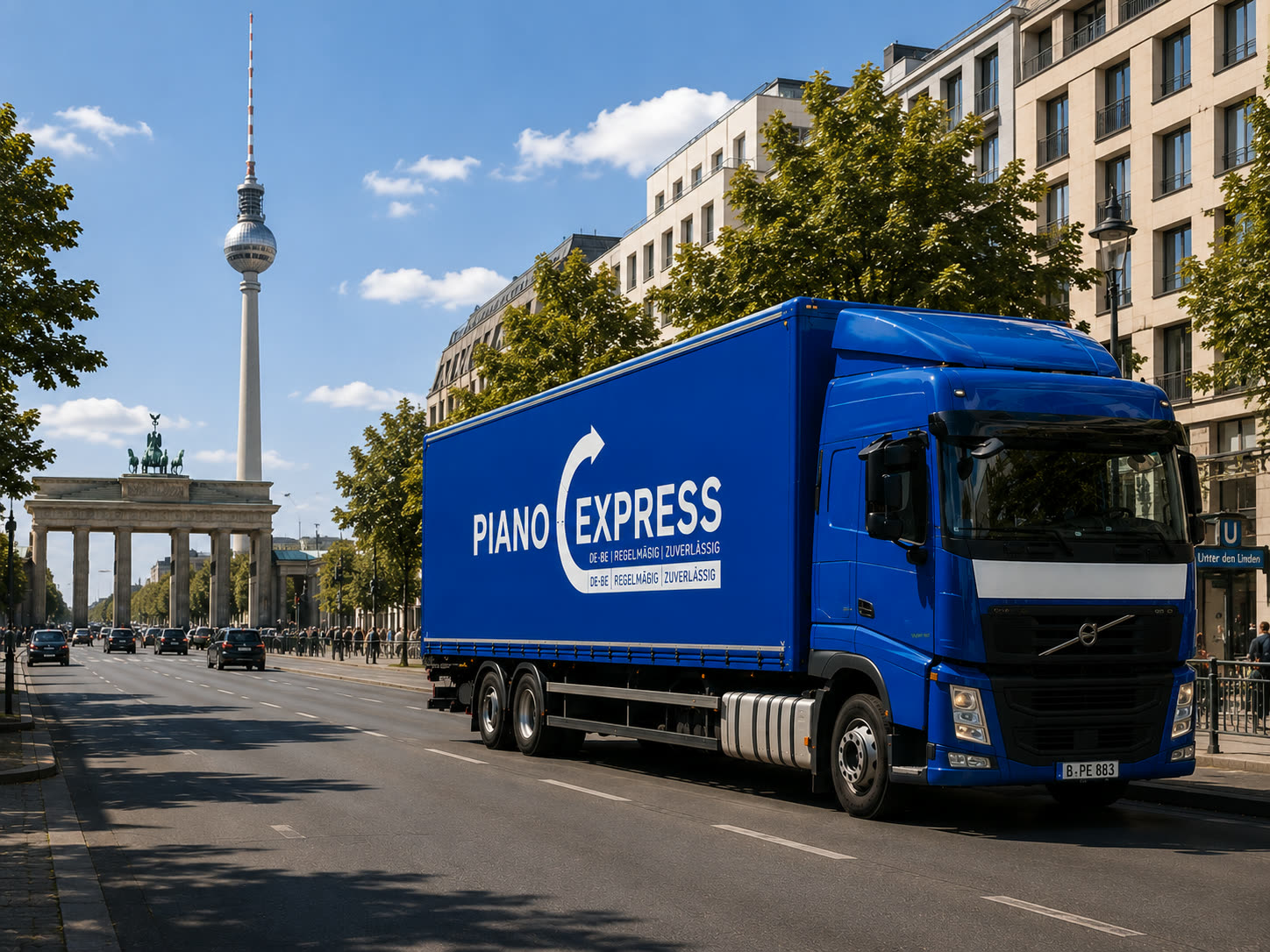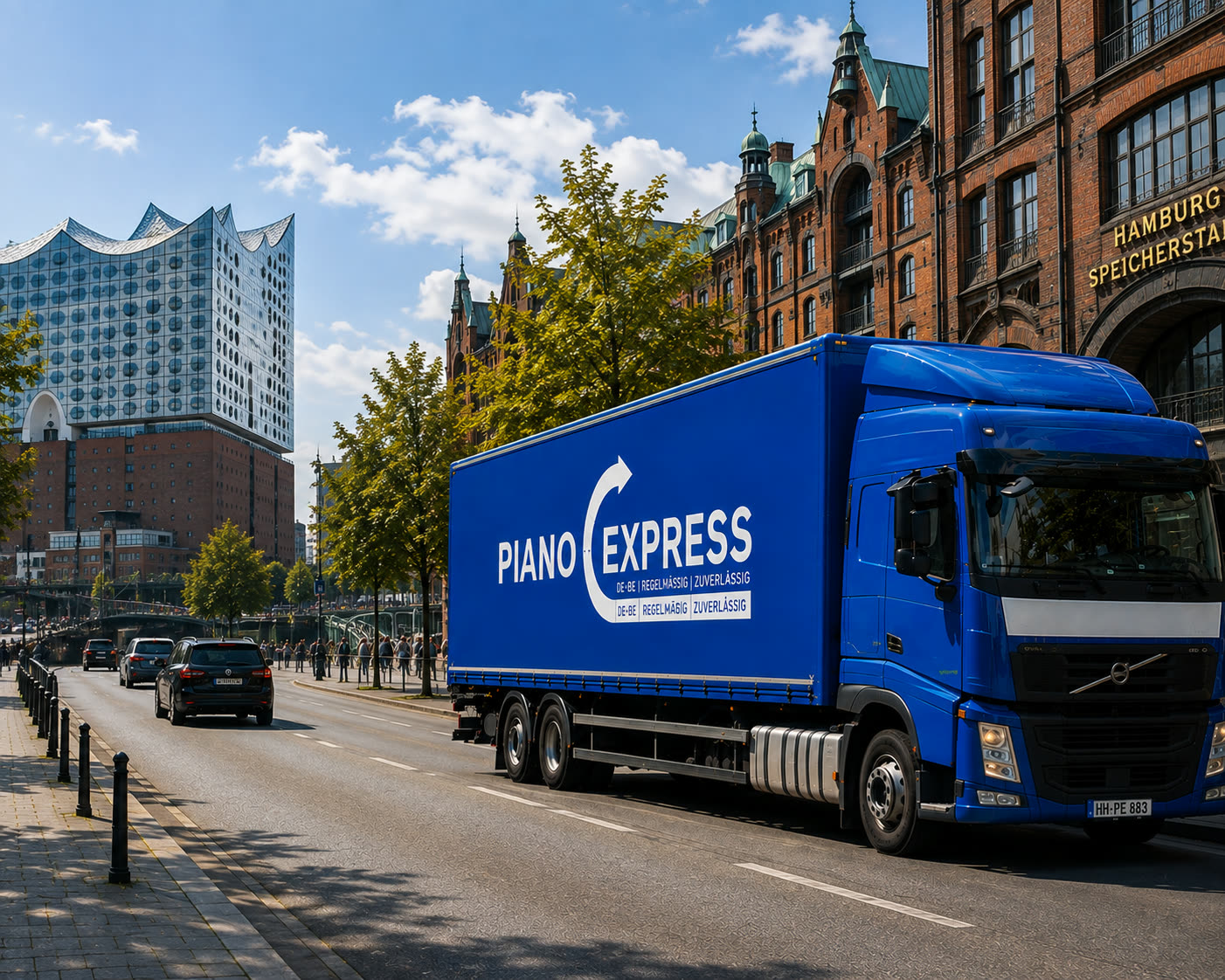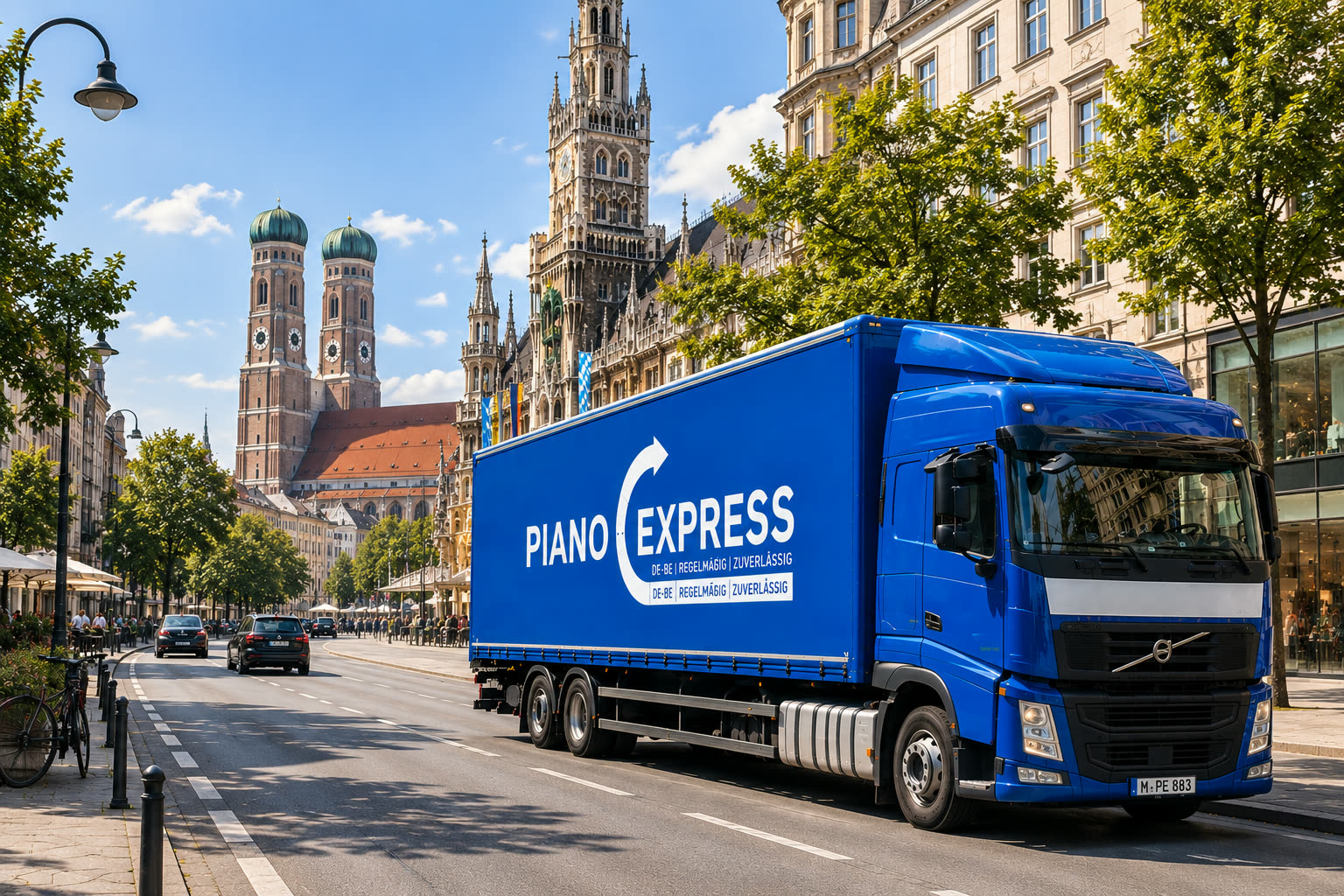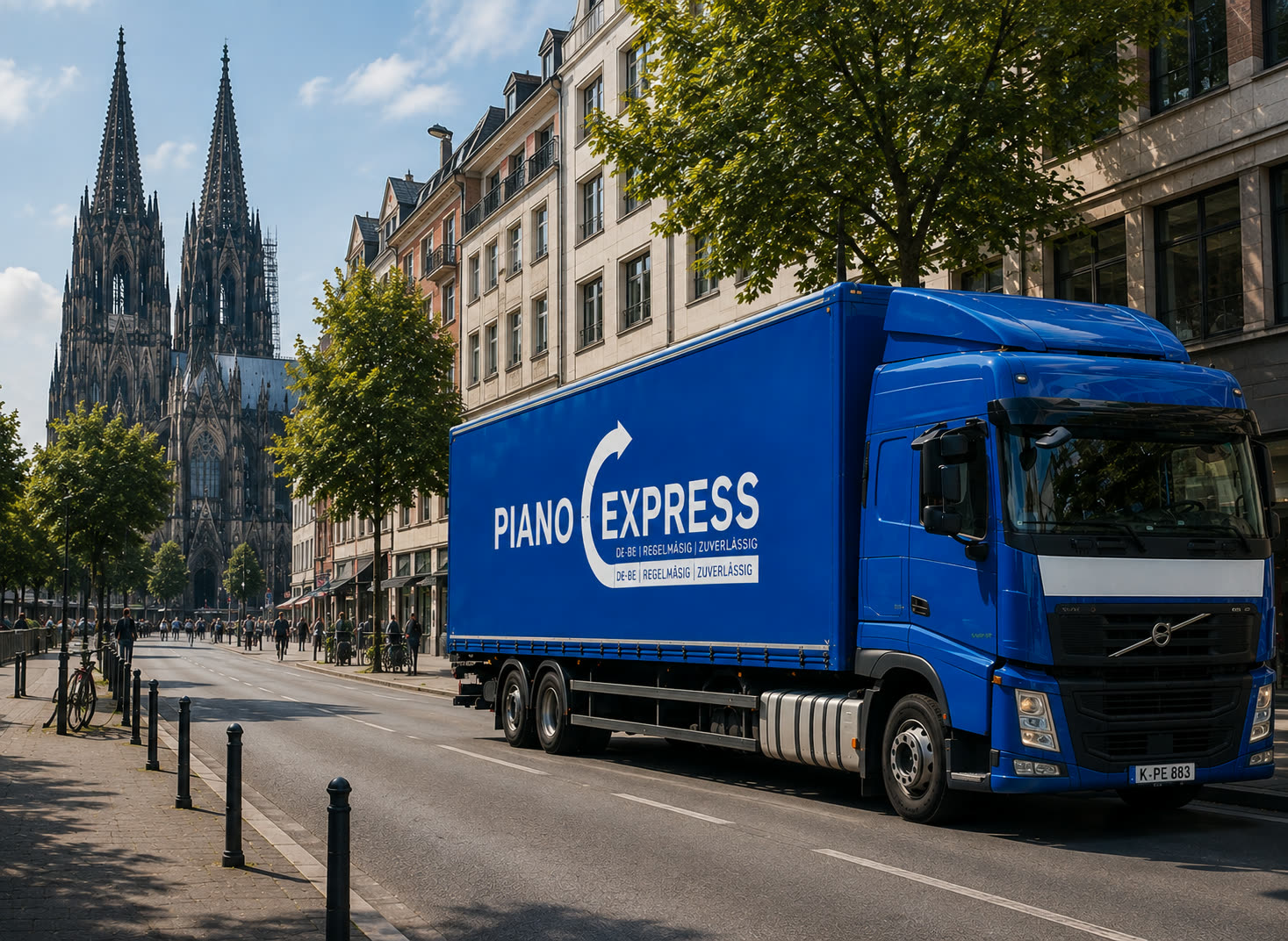

Piano transport with the professionals
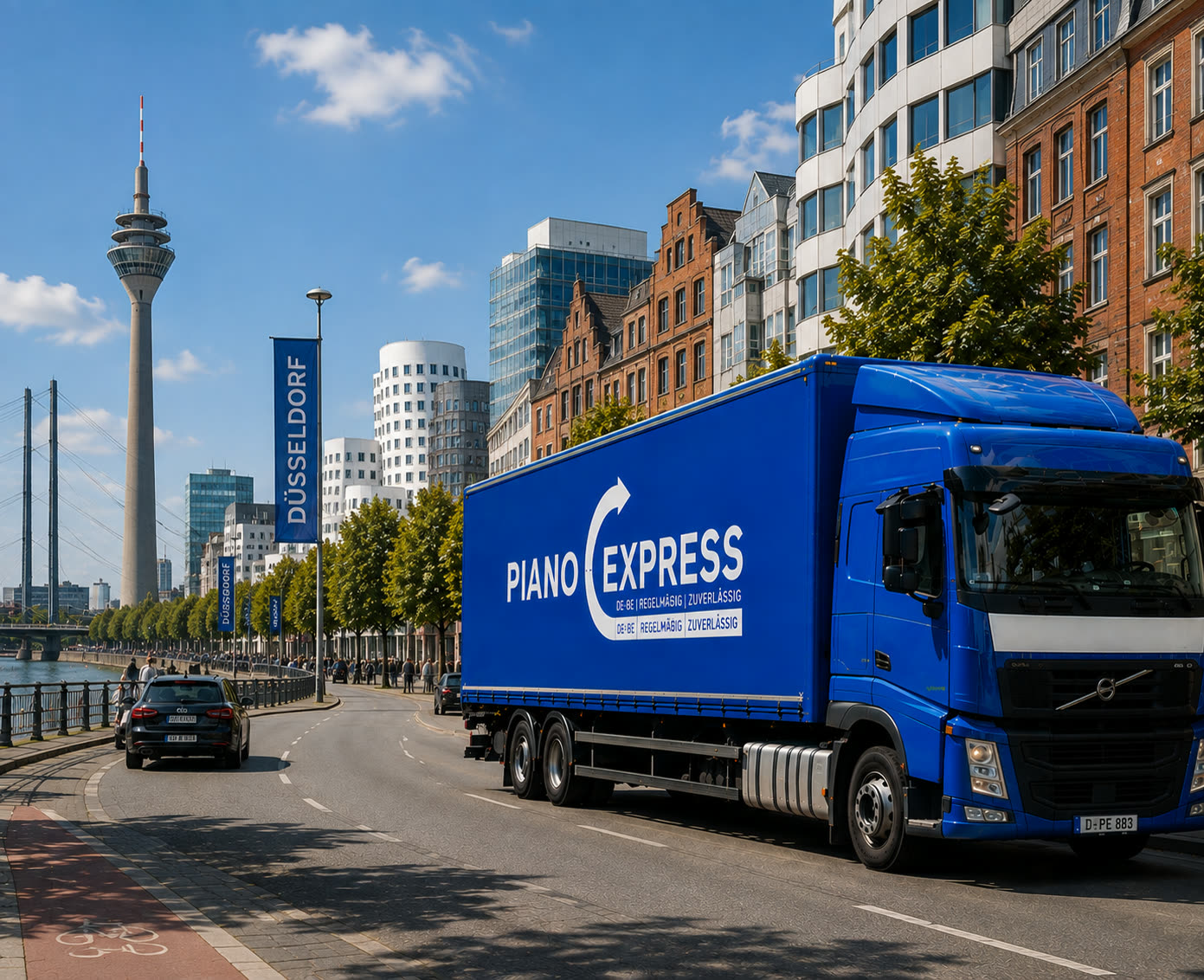
Piano-Express is your specialist for piano transport: whether within a city, over long distances or to other European countries – we get your goods reliably to their destination.

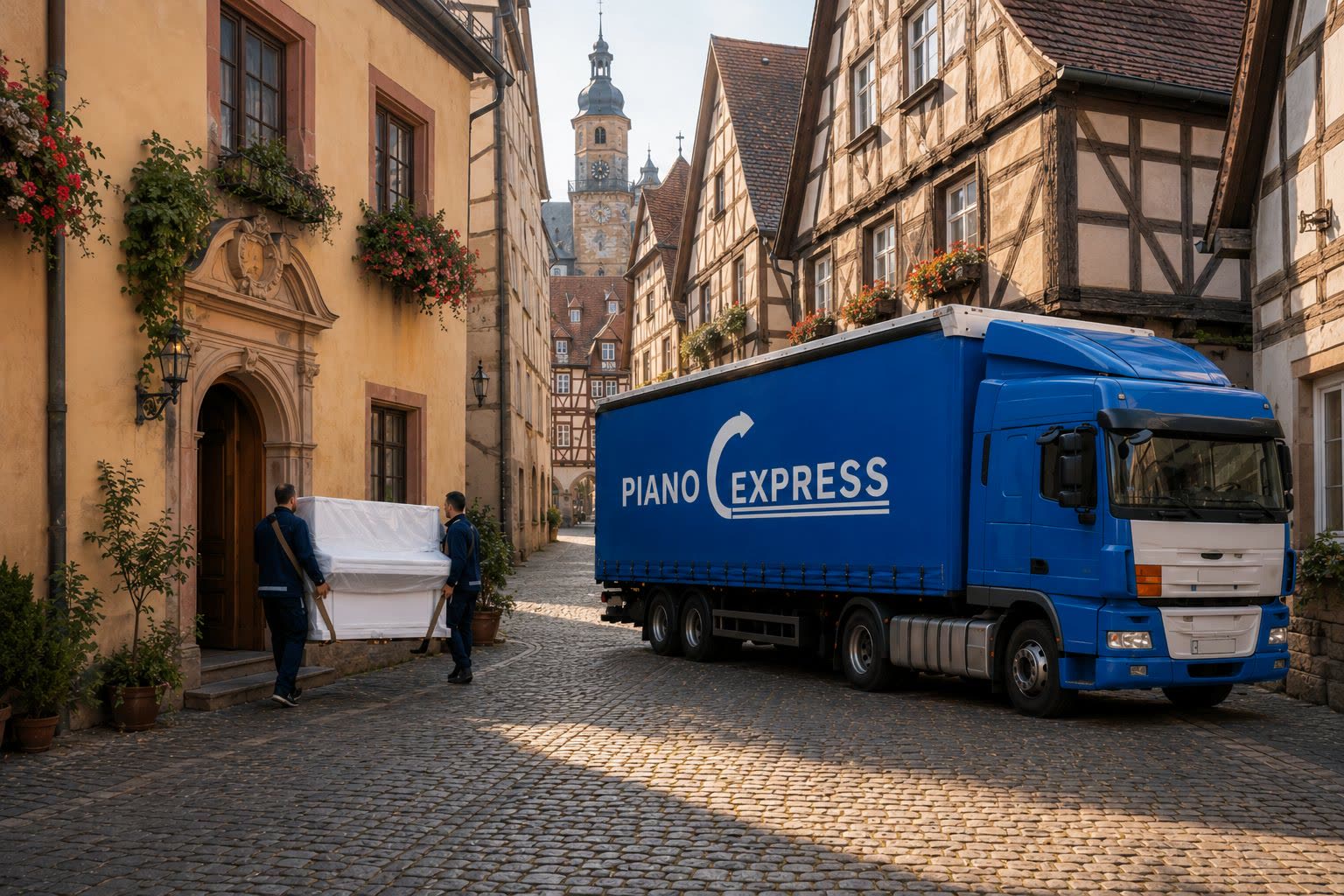
Crane transport, upright carrying & dismantling possible

Door-to-door service – across floors too

Shipment tracking & personal delivery notification

Specially trained team
Short-notice appointments possible

Optional extra services: storage for your instruments. Tuning service arranged.
From the first look at the conditions to the last centimetre at the destination.
How your piano transport works – step by step
From the first look at the on-site conditions, through inspection, route planning and preparation, to safe loading, transport and placement at the destination: every step follows a well-rehearsed process. The animation shows how our team goes about it – precise, controlled and centimetre by centimetre.
Piano & grand piano disposal
with Piano-Express
We not only take care of the safe transport of your piano or grand piano, but also of the professional disposal of instruments no longer needed. Fast, straightforward and across Germany.
- Send a request – a photo & location are enough
- Collection by our specialist team
- Professional disposal & recycling

Complex transport conditions
are mastered with experience
Narrow hallways, winding stairs, many floors or no lift: when transporting pianos and grand pianos, structural conditions often call for special solutions. That is exactly what we are set up for – with expertise, the right equipment and the necessary precision.
Whether upright carrying or dismantling: we find an individual solution – whatever obstacles exist on site. As an experienced team we know the challenges of transporting high-quality keyboard instruments and rely on tailored concepts instead of standard solutions.
What can we move for you?
Choose your instrument and your request – we take you straight to the right form.








Strongly networked,
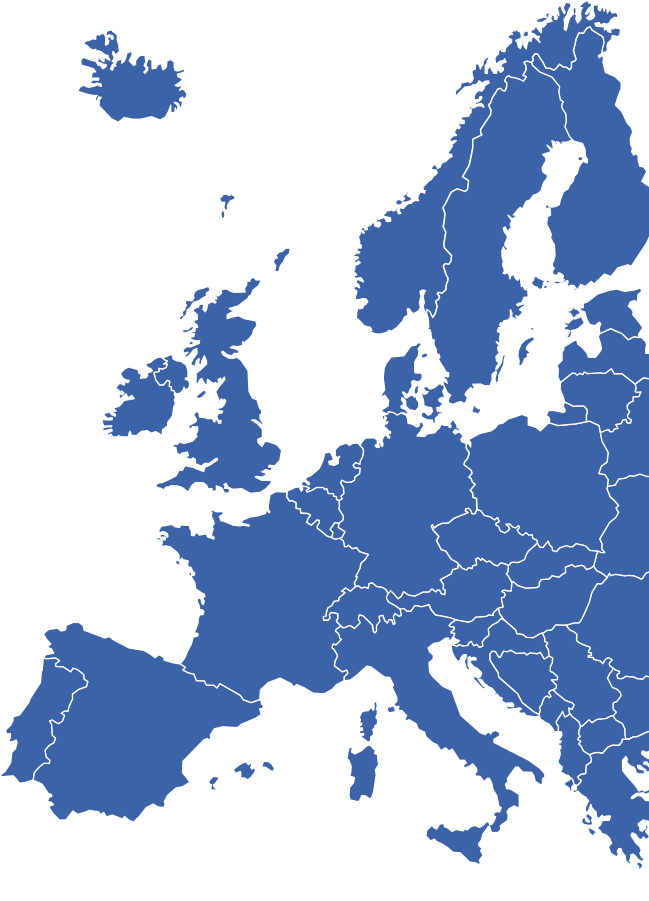
delivered across Europe
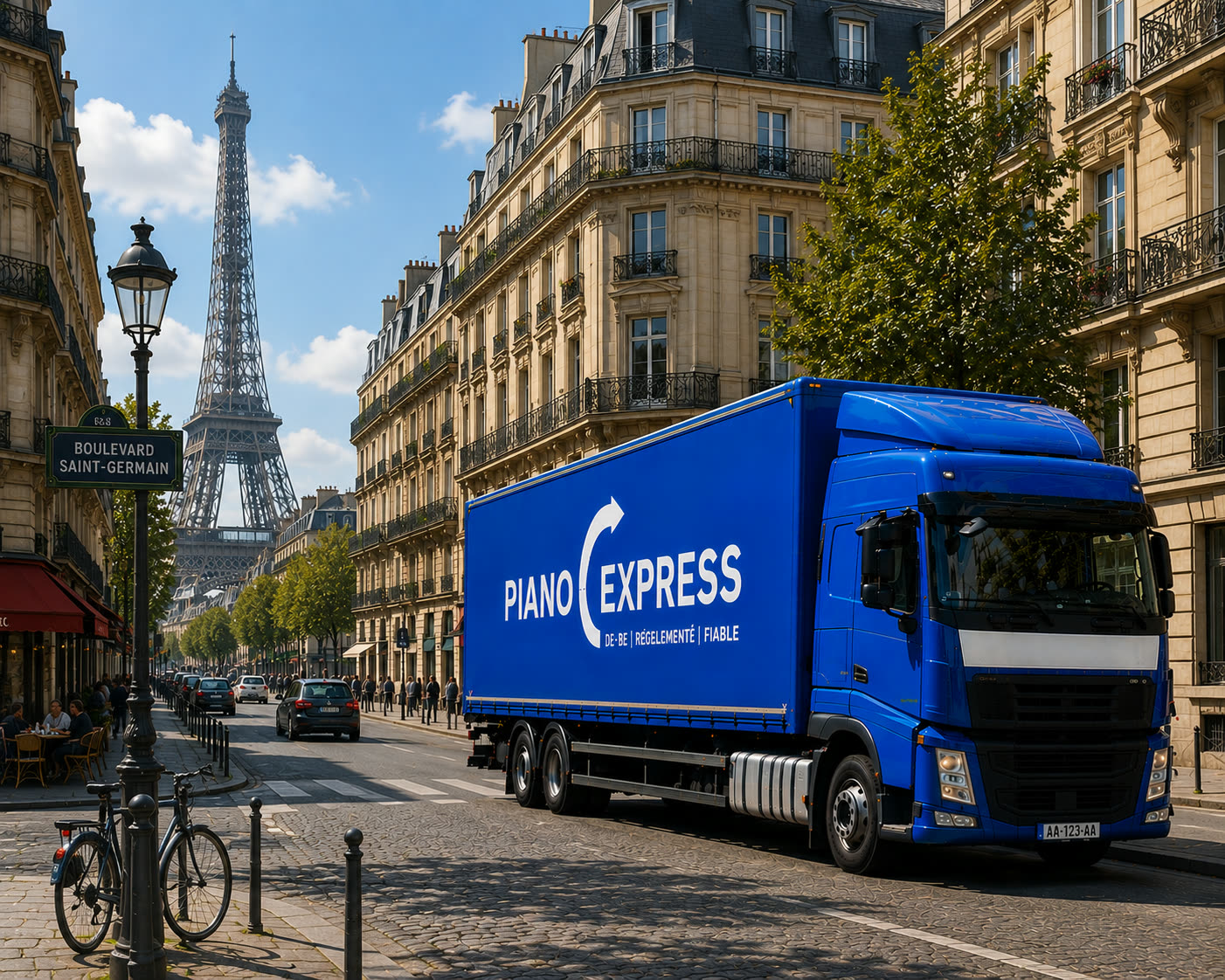
Piano-Express stands for precise, safe and punctual transports – nationally and internationally.
Your shipment live at a glance
With our track & trace system you can follow the status of your transport. One click on the link is enough and you see the location, the estimated time of arrival and all intermediate stops at a glance.

Questions about your shipment? Write to us.
info@piano-express.de
Prefer to talk directly? Give us a call.
0800 883 1 883
The most popular pickup and delivery locations
with Piano-Express:
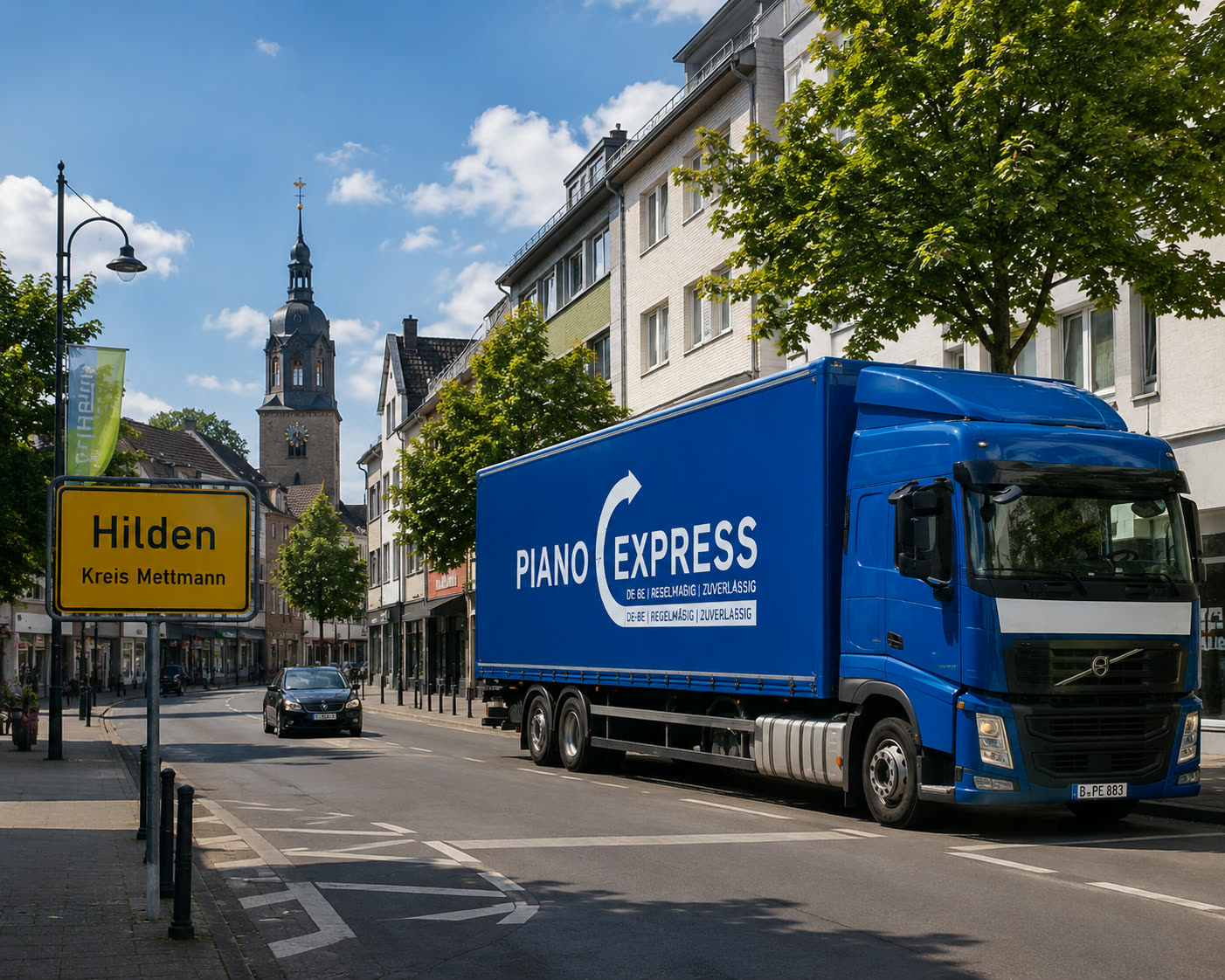
Piano transport in your region – click through to your location.